Smoke Detector
Optical and ionization smoke detectors for early fire detection in corridors, offices, and server rooms. 360° smoke entry design with LED alarm indicator. Works with both conventional and addressable panels.
Coverage Area
Up to 60 m² per detector
Operating Voltage
9–30V DC (loop-powered)
Response Time
< 30 seconds
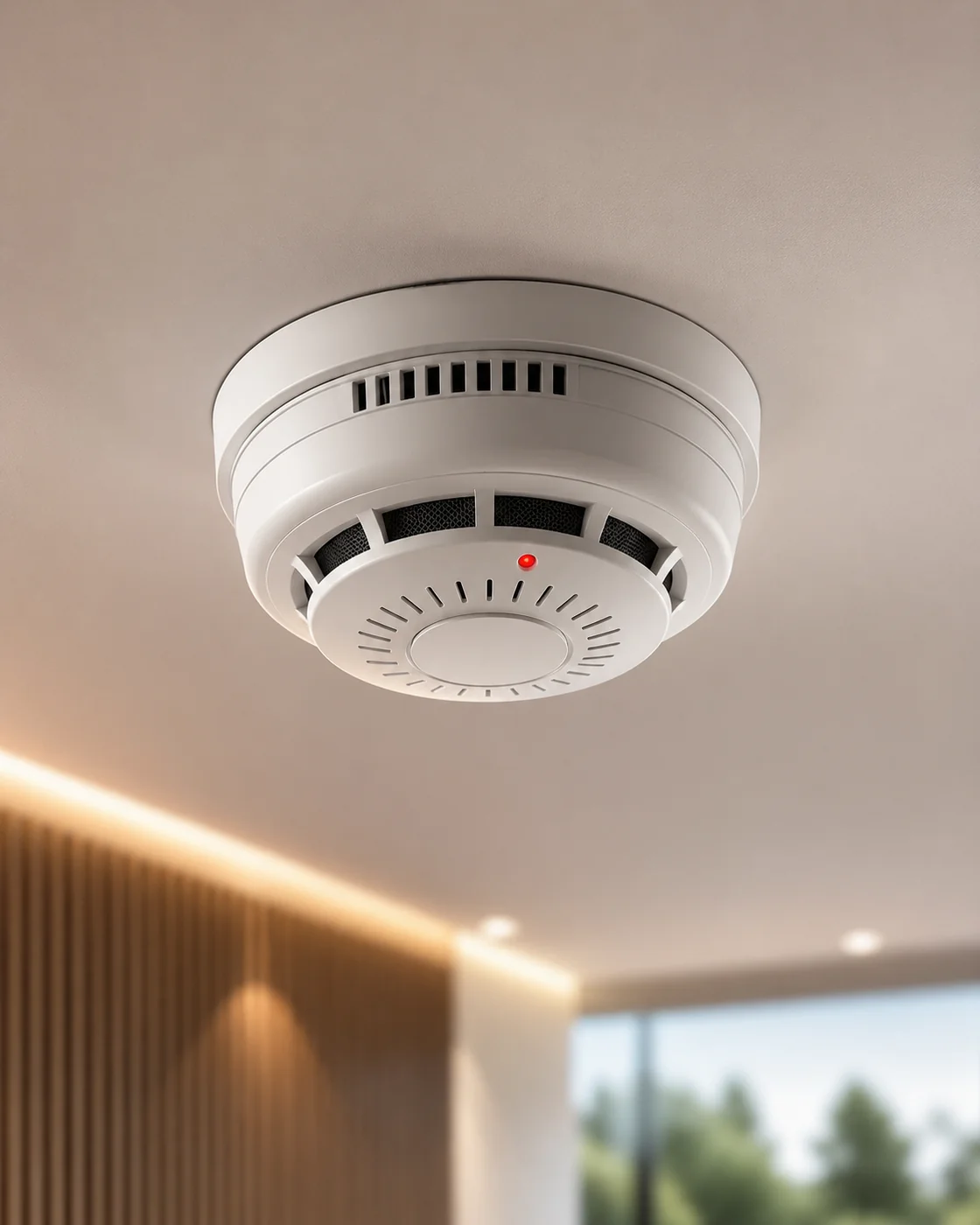
Smoke Detector
IS:11360 / EN 54-7
Working Principle
How It Works
An optical smoke detector uses an infrared LED and a light-sensitive receiver inside a protected sensing chamber. In normal conditions, the beam bypasses the receiver. When smoke particles enter, they scatter the infrared beam onto the receiver — triggering the alarm. Ionisation detectors use a tiny radioactive source that ionises the air inside the chamber; smoke particles disrupt this ionised current and trigger the alarm.
Product Range
Available Types & Variants
What You Get
Key Features
Use Cases
Where It's Used
At a Glance
Technical Specifications
Coverage Area
Up to 60 m² per detector
Operating Voltage
9–30V DC (loop-powered)
Response Time
< 30 seconds
Operating Temp.
-10°C to +50°C
Certification
IS:11360 / EN 54-7
Keep It Ready
Maintenance & AMC Tips
Clean detector sensing chamber with compressed air every 6 months
Functional test with smoke spray every 6 months
Replace detector unit every 10 years or as per manufacturer guidance
Never paint over or cover detectors — voids functionality
Check address setting after any maintenance on addressable systems
Legal & Compliance Requirement
Required by IS:2189, NBC 2016 Part 4, and fire NOC guidelines for all buildings above a prescribed floor area. Early smoke detection dramatically reduces response time, limits fire spread, and gives occupants maximum evacuation time. It is the single greatest life-safety benefit of any automatic fire protection system.
Get Smoke Detector for Your Premises
Contact our fire safety engineers for a free site visit, product demonstration, and customised quote — no obligation.
Keep Exploring