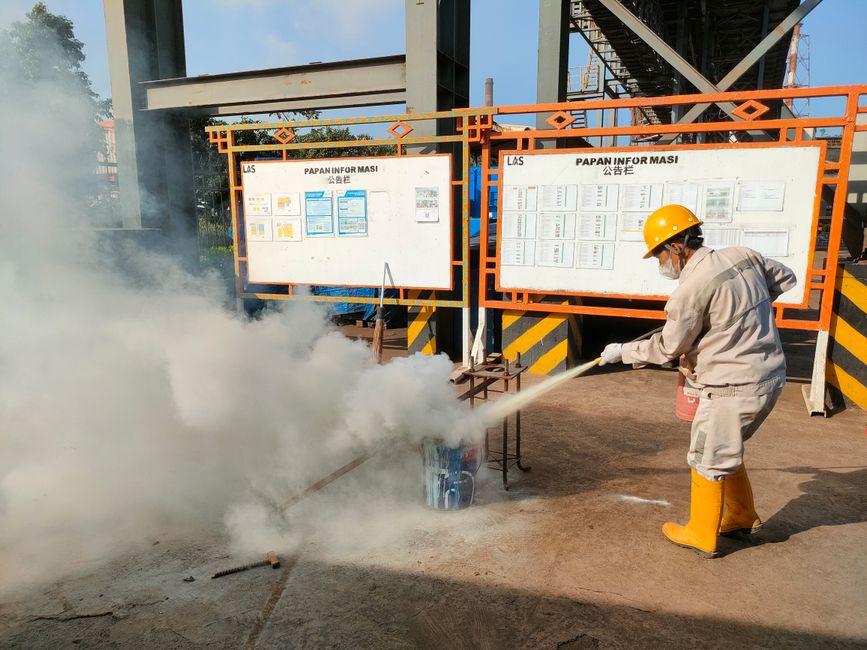
A scrap‑yard blaze that shook nearby towns
In recent years a scrap‑yard in Bhiwani erupted into a raging inferno that swallowed piles of metal, oil drums and old machinery. Witnesses later told investigators that several portable extinguishers sat on the perimeter, but most were either empty or of the wrong class for metal fires. By the time the fire brigade arrived, the initial attack had failed, allowing flames to spread to adjacent warehouses and causing extensive property loss. The incident underscored how a neglected refill schedule can turn a small spark into a major disaster.
The Bhiwani blaze also highlighted a regulatory blind spot: many small‑scale operators assume a five‑year visual check suffices, yet the relevant Indian Standard mandates a pressure test and refill after each use or every twelve months, whichever comes first. In the chaotic aftermath, fire officers repeatedly emphasized that an active, correctly charged extinguisher is the first line of defense, especially in metal‑laden yards where heat can rise rapidly.
For businesses in Yamunanagar, the lesson is clear. The city’s industrial corridors—particularly the metal‑fabrication hub near the Yamuna bank—share similar storage patterns, and a single dormant extinguisher can jeopardise an entire production line. Understanding the exact moments when a refill is non‑negotiable is the first step toward preventing a repeat of the Bhiwani tragedy.
Legal cadence: when the law forces a refill
Haryana fire‑safety rules require every portable extinguisher to undergo a hydrostatic test at least once every twelve months, followed by a pressure recharge. The test validates the cylinder’s integrity; the recharge restores the extinguishing agent that may have leaked or settled over time. Even if the gauge reads green, a silent loss can render the device ineffective during an emergency.
In addition to the annual test, a refill is mandatory after any discharge, no matter how brief. The discharge valve resets to a lower pressure, and the residual agent may be insufficient for a second attack. Operators often overlook this because the gauge still shows a reasonable reading, but the chemistry of the agent changes once it leaves the canister.
A second trigger is the visual inspection mandated after each use or whenever the extinguisher is moved to a new location. Corrosion on the valve, a cracked safety pin or a missing label all signal that a professional refill is required. Ignoring these cues can lead to a failed activation when minutes count.
Matching extinguisher class to Yamunanagar’s industrial mix
Yamunanagar’s manufacturing landscape includes steel rolling mills, textile dyeing units, and agro‑processing plants. Each of these environments presents a distinct fire risk profile, and the extinguisher class must align with the dominant fuel. For metal‑working workshops, a Class D dry powder extinguisher is the only agent capable of smothering combustible metal fires without reacting violently.
Textile dyeing and printing units handle flammable solvents and fibers, making Class B foam or Class ABC dry chemical extinguishers the preferred choice. Foam blankets the liquid fuel, while ABC agents can tackle both electrical and flammable liquid fires, offering flexibility for mixed‑use areas. In storage rooms where paper, cardboard and wooden pallets accumulate, a Class A water‑based agent provides effective cooling and suffocation.
Electrical panels, control rooms and machine‑tool bays demand extinguishers that will not conduct electricity. Here, a CO₂ or a clean‑agent Class BC extinguisher is essential. The key is not to rely on a single type for the entire facility; instead, map each zone to its most likely fire scenario and place the appropriate class within arm’s reach.
- Identify dominant fuel in each zone
- Select Class D for metal, Class B for liquids, Class A for solids
- Use CO₂ or clean‑agent for electrical areas
Practical refill workflow for busy workshops
When an extinguisher signals a low‑pressure gauge or after a discharge, the first step is to isolate the unit and label it “out of service.” This prevents accidental use while a technician arrives. The cylinder is then transported to a certified refill station where a hydrostatic test confirms the shell’s safety, followed by a complete recharge of the extinguishing agent.
A professional fire‑safety service runs a mobile refill operation that reaches most industrial estates in Yamunanagar promptly. Technicians carry calibrated pressure gauges, certified replacement agents and the paperwork needed for the fire department’s post‑refill inspection. They also verify that the mounting brackets and signage comply with the latest Haryana guidelines, ensuring the unit is ready for immediate deployment.
After the refill, the technician affixes a new inspection tag, records the test date in a logbook kept on site, and walks the manager through a quick activation drill. This hands‑on approach not only satisfies regulatory requirements but also builds confidence among workers that the equipment will perform when needed.
Quick compliance checklist for Yamunanagar firms
A concise audit can reveal gaps before an inspector arrives. Begin by confirming that every extinguisher bears a legible label showing its class, last refill date and the responsible officer’s signature. Next, walk the perimeter of each work area to ensure that the travel distance to the nearest unit does not exceed the limit prescribed for that class.
Inspect the pressure gauges; any reading in the red zone or a stuck needle warrants immediate removal. Verify that safety pins are intact, the hose or nozzle is free from cracks, and the mounting bracket is securely anchored to a wall or a fixed post. Finally, check that the fire‑safety logbook is up‑to‑date with entries for each test, refill and maintenance activity.
If any item on the list fails, schedule a refill or replacement within the next business day. Keeping a digital copy of the log on a cloud platform simplifies future audits and provides evidence of continuous compliance to the Haryana Fire Service.
- Label check: class, date, officer’s sign
- Gauge reading within green zone
- Safety pin, hose, and bracket integrity
- Travel distance within prescribed limits
- Logbook entry up‑to‑date
Turning checklist into routine safety culture
Embedding the checklist into daily shift handovers turns a periodic task into a habit. Assign a junior supervisor to perform a five‑minute visual sweep before each production run, noting any anomalies on a whiteboard that the night manager reviews. Over time, workers learn to spot a low‑pressure indicator or a missing safety pin without prompting.
Leadership should reinforce the habit by linking successful compliance to incentives, such as recognition in monthly safety bulletins. When a refill is completed, the technician’s report can be posted alongside the logbook entry, creating a transparent record that everyone can see. This openness reduces the temptation to hide a faulty unit and encourages prompt reporting.
For firms ready to formalise the process, a quick call to a professional fire‑safety service can schedule a site survey. The survey will map extinguisher locations, recommend class upgrades where needed, and set a calendar for annual tests and refills. Taking that step today ensures that the next fire, if it ever occurs, meets a ready, correctly charged line of defence.
Need help with this at your own site?
Zed-King Fire & Safety has handled fire equipment, AMC, Fire NOC and training for factories, schools, hospitals and commercial buildings across Haryana since 2012. Free site survey, honest assessment — only what your building actually needs.