Why the Greater Noida blaze is a wake‑up call for Ambala workshops
When the flames engulfed a midsize textile unit in Greater Noida last month, the fire alarm sounded, but most workers were still at their machines. The smoke filled the shop floor within minutes, and the lack of a practiced evacuation route turned a controllable incident into a chaotic rescue. Observers noted that a simple drill could have shaved precious minutes off the response time. For Ambala’s clusters of metal‑fabrication units and small-scale agro‑processing plants, the lesson is stark: without regular training, a spark can become a disaster before anyone reaches the exit.
Ambala’s industrial belt stretches from the old railway yards near the city centre to the emerging logistics parks on the outskirts. Many of these premises operate in buildings that were retrofitted from warehouses, with narrow aisles and stacked pallets that act like tinder. The workforce often consists of skilled laborers who have never seen a fire extinguisher in action, let alone practiced a coordinated exit. When a fire starts, the instinct to protect the product can override personal safety, especially if there is no clear protocol.
The recent blaze also highlighted a regulatory gap. While the relevant Indian Standard mandates periodic fire drills, enforcement is uneven in smaller units that fall outside the larger corporate audit loops. This creates a false sense of compliance—paperwork is filed, but on‑ground readiness remains weak. For Ambala entrepreneurs, the cost of a missed drill is far higher than the modest time investment needed to embed a training routine.
Mapping the fire‑risk landscape inside a typical Ambala unit
Start by walking the floor with a checklist: locate every heat source, from welding torches to diesel generators, and note any combustible storage such as oil drums or loose timber. Pay special attention to ceiling heights and ventilation shafts, because smoke tends to rise and linger in high‑bay areas. Mark the nearest fire‑hose reel, portable extinguisher, and any automatic suppression system that may be present, even if it is rarely inspected.
Next, identify the egress routes. A clear path must exist from each workstation to the nearest exit, and doors should swing outward to avoid bottlenecks. In many Ambala workshops, fire doors are propped open for convenience, nullifying their purpose. Verify that exit signs are illuminated and that emergency lighting functions when the main supply is cut. A short test with the mains off can reveal hidden failures before a real incident.
Finally, assess the human element. List the number of workers per shift, their language preferences, and any special‑needs staff who may require assistance. Knowing who is on site at any hour helps tailor the drill script and ensures that no employee is left out of the safety loop. This baseline mapping takes a single afternoon but creates the data set needed for every subsequent training session.
Designing a low‑cost, mandatory fire‑safety training program
A practical training module can be built around three core topics: fire awareness, extinguisher use, and evacuation procedures. Begin with a short classroom talk that explains how fires develop, using the familiar triangle of heat, fuel, and oxygen. Keep the language simple and relate examples to the workshop’s own processes, such as how a stray spark from a grinding wheel can ignite nearby oil-soaked rags.
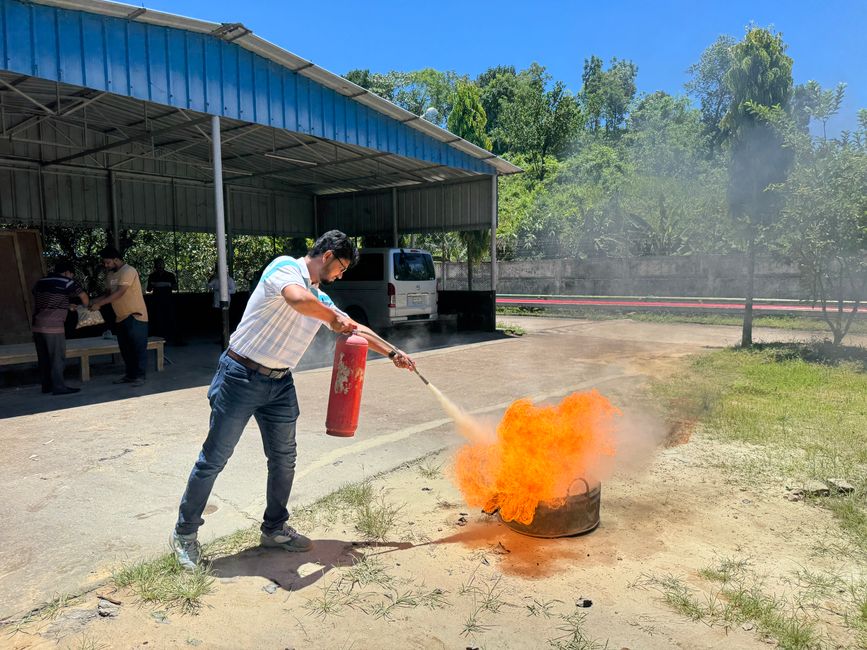
The hands‑on portion should involve a certified trainer demonstrating the PASS technique on a dummy fire extinguisher. Workers practice pulling the pin, aiming at the base of the flame, squeezing the handle, and sweeping side‑to‑side. Even a single 15‑minute session per month builds muscle memory. Rotate the trainer among shifts so that night crews receive the same exposure without disrupting production.
Wrap up with a tabletop evacuation drill. Sketch the floor plan on a flip chart, assign roles like floor warden and roll‑call officer, and walk through the steps verbally. This prepares the team for the real‑time drill that follows later in the week, ensuring that every participant knows where to go and who to report to once outside.
- Identify heat sources and combustible storage
- Verify clear, outward‑opening egress routes
- Check functioning of exit signs and emergency lighting
- Record shift‑wise workforce composition
Running the first live evacuation drill in an Ambala workshop
Schedule the drill during a normal production run to capture realistic conditions. Announce a brief “fire alarm test” over the public address system, then sound the actual alarm. Workers should stop their tasks, leave tools safely, and proceed to the pre‑identified assembly point. Observe how quickly each zone clears and note any hesitation at bottleneck doors or stairwells.
After the alarm, a floor warden conducts a headcount using a simple checklist, confirming that all personnel, including contract workers, are present. If anyone is missing, the warden signals the supervisor to initiate a search, mimicking the real‑life protocol. Once everyone is accounted for, the drill ends with a debrief: discuss what worked, where confusion arose, and how signage could be improved.
Zed‑King Fire & Safety can step in at this stage to provide a customized training package that includes on‑site fire‑extinguisher demonstrations, bilingual drill scripts, and a post‑drill audit report. Their experience with Ambala’s industrial mix ensures that the content respects local work practices while meeting the relevant Indian Standard’s expectations.
Maintaining momentum: refresher sessions and record‑keeping
A single drill does not guarantee long‑term safety. Set a calendar reminder for quarterly refresher talks, each lasting no more than ten minutes, to reinforce the fire triangle concept and update staff on any equipment changes. Rotate the trainer role among senior technicians so that the knowledge stays internal and the cost remains low.
Keep a simple logbook at the shop floor: date of training, names of attendees, type of drill, and any observations. This record satisfies inspectors and also serves as a quick reference when a new employee joins. When a piece of equipment is added or a layout is altered, update the evacuation map and repeat the tabletop walkthrough to embed the changes.
Digital tools can augment the paper log. A basic spreadsheet shared on a local network allows supervisors to track compliance across multiple shifts without extra software. The key is consistency; a missed entry should trigger a reminder to schedule the next session rather than being ignored.
- Quarterly 10‑minute refresher talks
- Maintain a drill logbook with dates and attendees
- Update evacuation maps after any layout change
From training to compliance: next steps for Ambala owners
With the mapping, training, and drill cycle in place, the next logical move is to verify that the fire‑safety infrastructure matches the newly practiced procedures. Inspect extinguishers for pressure, ensure hose reels are unobstructed, and confirm that the fire alarm panel is fully functional. Any gaps discovered should be corrected before the next regulatory audit, turning the drill insights into tangible upgrades.
Engage with the local fire department for a walkthrough; they often provide free advice on signage placement and can issue a provisional clearance that helps avoid future penalties. Sharing the drill logbook with them demonstrates proactive compliance and may smooth the path for obtaining a Fire NOC, if required for expansion.
Finally, call Zed‑King Fire & Safety for a free site survey. Their experts will walk through your premises, validate the training outcomes, and suggest any missing equipment or procedural tweaks. A brief phone call can set the appointment, turning the training effort into a fully integrated safety system that protects people, product, and profit.
Need help with this at your own site?
Zed-King Fire & Safety has handled fire equipment, AMC, Fire NOC and training for factories, schools, hospitals and commercial buildings across Haryana since 2012. Free site survey, honest assessment — only what your building actually needs.