A flash fire in Karnal’s agro‑chemical hub shows what can go wrong
Imagine a midsized agro‑chemical unit on the outskirts of Karnal. A minor leak of liquid fertilizer ignites, sending a plume of orange flame across a large floor area. Workers scramble, but the nearest fire hydrant is tucked behind a storage rack, its outlet blocked by pallets. Without an automatic sprinkler head overhead, the fire spreads to adjacent reactors quickly, turning a controllable flash into a full‑scale blaze that threatens nearby warehouses and the main road.
The incident forced the local fire brigade to pump water from a distant municipal hydrant, losing precious minutes. The water pressure dropped as the hose ran through narrow alleys, and the crew could not reach the interior of the plant before the fire breached the roof. Smoke filled the surrounding residential lanes, prompting an evacuation that halted traffic on the main highway for hours.
Post‑incident reports highlighted two glaring gaps: insufficient hydrant spacing and a complete lack of wet‑pipe sprinkler coverage in high‑risk zones. The relevant Indian Standard requires regular hydrant placement in such factories, yet the plant had only one functional unit for the entire complex. Likewise, any area storing volatile chemicals should have an automatic sprinkler system, which was missing entirely.
Specific fire hazards that plague Karnal’s industrial estates
Karnal’s industrial belt hosts a mix of fertilizer depots, polymer mixers, and metal‑coating workshops. Each process involves combustible dust, flammable solvents, or high‑temperature furnaces. When dust settles on equipment, a single spark can trigger a dust explosion, a phenomenon that spreads faster than a liquid fire and overwhelms manual suppression efforts.
Many factories still rely on manual fire‑extinguishers placed at the periphery, assuming workers can reach them in time. In reality, narrow aisles filled with stacked drums create choke points, and the loud ambient noise from machinery masks alarm signals. The absence of a dedicated fire‑water supply network means the brigade must tap into municipal mains, which are often insufficient for large‑floor‑area plants.
Temperature‑controlled storage rooms for agro‑chemicals demand a stable environment. If a cooling system fails, the stored liquids can reach their flash point, releasing vapours that travel along ventilation ducts. Without a sprinkler head in the ceiling, these vapours condense on cooler surfaces and ignite, turning a silent leak into a sudden flash fire that spreads vertically through the building.
Code‑compliant hydrant layout for Karnal factories
The first step is a site‑wide hydraulic survey that maps existing water mains, valve boxes, and potential hydrant locations. Surveyors check pipe material, ensuring it bears the BIS mark and is free from corrosion. They also verify that the water pressure at each proposed point meets the minimum required for reliable two‑stream operation, a condition the local municipality typically confirms through a pressure gauge test.
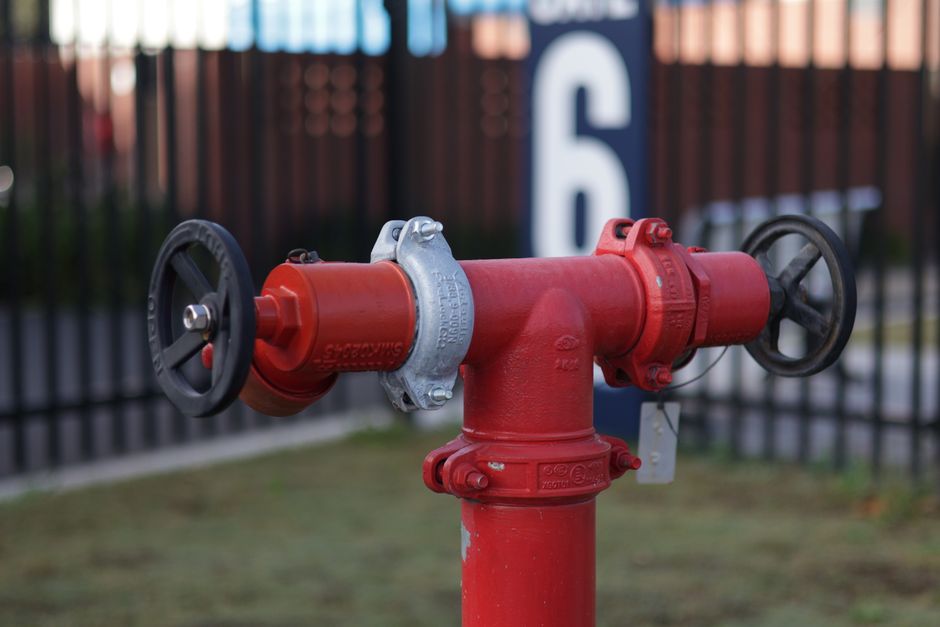
A compliant layout places a hydrant within a short walking distance of every hazardous zone, including chemical storage, furnace rooms, and loading bays. Each hydrant must have a clear, unobstructed access route—no pallets, no temporary scaffolding. The outlet should be a standard size compatible with fire‑engine hoses, and the valve lever should be clearly labelled in Hindi and English for rapid operation.
In addition to placement, the system needs a dedicated fire‑water pump that can maintain flow even if municipal supply fluctuates. The pump should be housed in a fire‑rated enclosure, wired to an automatic start switch linked to the fire alarm panel. Once activated, the pump draws water from a reservoir or a municipal source, delivering a steady stream to every hydrant without manual intervention.
- Map existing mains and identify corrosion‑free sections
- Locate hydrants close to each high‑risk area
- Ensure clear 360° access and standard hose‑compatible outlets
Designing an automatic sprinkler network that fits local needs
Sprinkler design begins with classifying each floor area according to fire load: high‑risk zones like chemical mixing rooms receive a dense wet‑pipe layout, while storage aisles get a moderate density. The layout draws on ceiling heights and obstruction maps to position heads where they can discharge unobstructed spray patterns, typically covering a reasonable radius per head in open spaces.
The system must integrate with the factory’s existing alarm panel, so that a heat or smoke detector triggers the sprinkler valves instantly. All piping should be of galvanized steel with a BIS mark, and joints must be threaded and sealed with approved gaskets to prevent leakage. Routine hydro‑static testing validates that each branch maintains adequate pressure before hand‑over.
Zed‑King Fire & Safety can conduct the site survey, supply the compliant sprinkler heads, and manage the installation while coordinating with the local fire‑department for the necessary NOC. Their engineers also offer a post‑installation training session for plant supervisors, ensuring that the crew knows how to operate the system and perform basic maintenance.
- Classify zones by fire load and select head density
- Use galvanized steel piping with approved gaskets
- Integrate with existing alarm panel for instant activation
Step‑by‑step guide for a fast, cost‑effective upgrade
Step one: request a free on‑site assessment from a qualified fire‑safety consultant. The assessor will walk the premises, note existing hydrants, map high‑risk equipment, and produce a schematic showing gaps. This initial visit also clarifies any local fire‑department requirements specific to Haryana’s industrial zones.
Step two: obtain a detailed proposal that lists the number of new hydrants, sprinkler heads, pipe lengths, and the pump capacity needed. The proposal should break down material specifications, labour hours, and a timeline that fits the factory’s production schedule, typically completing installation over a couple of weekend shutdowns to minimise downtime.
Step three: secure the fire‑NOC from the municipal authority. Submit the approved schematic, hydraulic calculations, and material certificates. Once the NOC is issued, schedule the installation, beginning with trenching for new water lines, followed by mounting hydrants and laying sprinkler piping. After pressure testing, the system is commissioned and handed over with as‑built drawings.
Maintaining the system and next steps for Karnal owners
After commissioning, a quarterly inspection regime keeps the system ready. Inspectors check valve operability, ensure no rust or paint buildup blocks hydrant outlets, and verify that sprinkler heads are free of dust. Any obstruction triggers an immediate corrective action, often a simple cleaning or a valve lubrication, preventing performance loss during an emergency.
Annual maintenance contracts with a trusted fire‑safety provider cover hydro‑static testing, pump servicing, and refill of any extinguishing agents used during drills. These contracts also include a refresher training for plant staff, reinforcing correct evacuation routes and manual fire‑fighting techniques should a primary system fail.
For factories in Karnal looking to upgrade now, the practical next step is to call Zed‑King Fire & Safety for a complimentary site survey. Their team will assess your specific risks, outline a compliant solution, and help you navigate the fire‑NOC process, ensuring your plant meets Haryana regulations without unnecessary delays.
Need help with this at your own site?
Zed-King Fire & Safety has handled fire equipment, AMC, Fire NOC and training for factories, schools, hospitals and commercial buildings across Haryana since 2012. Free site survey, honest assessment — only what your building actually needs.