Aug 15, 2023Last updated Oct 1, 2026By Naresh Ravish7 min read
Why Annual Maintenance is Crucial
Do not wait for an emergency to discover that your pump, alarm panel, extinguisher, or emergency light is not working.
Maintenance is your real safety system
Many buildings install fire protection equipment and assume the site is now protected for years. The problem is that fire safety systems do not stay reliable on their own. Pumps, detectors, batteries, valves, extinguishers, alarms, and emergency lights all degrade with age, dust, vibration, corrosion, humidity, and everyday neglect. A system can look complete during a visual walk-through and still fail when it is actually needed.
Annual maintenance is crucial because fire protection depends on connected layers. Detection must work so people are warned. Emergency lighting must work so they can see where to go. Pumps and hydrants must work so firefighting systems deliver water pressure. Extinguishers must work so early-stage incidents can be controlled. When one layer fails, the pressure on the others increases immediately.
Organizations often spend well on installation and then unintentionally underinvest in upkeep. That creates false confidence, which is more dangerous than obvious absence of equipment. A detector covered in dust, a weak backup battery, a closed isolation valve, or a pump that no longer auto-starts may remain unnoticed for months if maintenance is treated as paperwork instead of technical assurance.
The practical truth is simple: installation creates the potential for protection, but maintenance keeps that protection alive. Without regular testing and correction, a fire system is only a collection of devices. With proper AMC and follow-up, it becomes a dependable emergency response system.
A proper Annual Maintenance Contract is much more than a vendor visit or a stamped checklist. It includes inspection, testing, measurement, fault identification, documentation, and recommendations for repair or replacement. Good AMC work confirms not only that equipment exists, but that it is operational, accessible, and suitable for the site as it exists today.
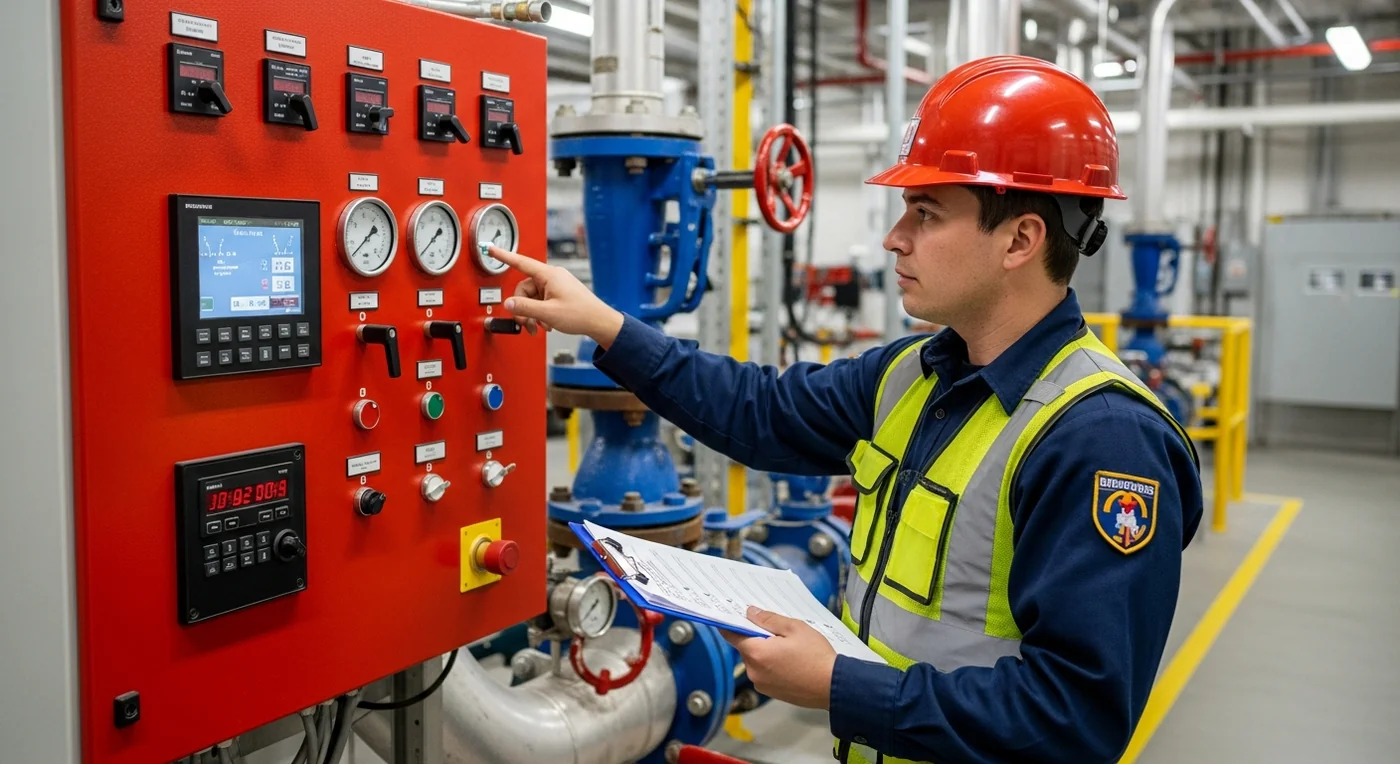
Pump maintenance usually includes checking auto and manual start function, jockey pump behavior, pressure performance, diesel engine readiness where applicable, battery condition, charger health, controller indications, and test-run operation. Hydrant and sprinkler maintenance may include valve position verification, hose and landing valve condition, pressure checks, leakage review, and confirmation that cabinets remain accessible and complete.
Detection and alarm system maintenance often includes panel health, battery backup, zone or loop fault checks, detector condition, manual call point accessibility, sounder operation, and review of whether layout changes have affected detector suitability. This matters because renovations, partitions, ceiling changes, or furniture relocation can reduce the performance of a previously correct design.
Extinguishers, emergency lights, exit signs, and related life-safety accessories also form part of effective AMC scope. Pressure or weight checks, refill schedules, nozzle condition, battery backup testing, and signage visibility reviews help ensure that smaller but essential components do not become the weak link in an otherwise good system.
Pump auto-start, controller health, battery condition, and pressure testing.
Hydrant and sprinkler valve inspection, hose review, and leakage or obstruction checks.
Extinguisher pressure or weight verification, refill scheduling, and physical condition checks.
Emergency lighting, exit signage, and access clearance verification across the building.
Common failures we see in sites
Many serious fire safety failures begin as minor issues that nobody addresses. A jockey pump may stop cutting in correctly, reducing system pressure over time. A diesel pump battery may weaken slowly and fail only during a power outage. A control valve may remain partially closed after maintenance work. Sprinkler heads may become painted over, dusty, or obstructed by storage. Extinguishers may remain on the wall long after their service date passes.
Renovation and operational changes also create hidden faults. A detector that was correctly positioned can become blocked by a new partition. A hose cabinet can be hidden behind furniture. Signage can disappear during repainting. Temporary storage can turn final exits into choke points. These changes happen gradually, which is exactly why a periodic maintenance lens is necessary.
Documentation gaps are another common weakness. Some sites have equipment but cannot clearly show the last service date, unresolved panel fault, battery replacement history, or the status of pending corrective actions. In an audit or real emergency, missing records create confusion and slow decision-making. Good maintenance is technical work plus clear documentation of what was checked, what failed, and what was corrected.
The encouraging part is that most of these failures are preventable. They are not caused by impossible technology problems. They are usually the result of postponed inspections, ignored observations, or maintenance treated as a formality instead of a life safety process.
Jockey pump not cutting in or maintaining pressure correctly.
Diesel pump battery drained, charger faulty, or engine not ready to start.
Sprinkler heads choked, painted over, obstructed, or isolated by closed valves.
Expired extinguishers, unreadable tags, weak emergency lights, or missing signage.
Benefits beyond compliance
Compliance is one reason to maintain fire systems, but it is not the only benefit and often not the biggest one. Reliable systems reduce business interruption. When a small event is detected early, evacuation happens smoothly, and firefighting systems respond correctly, the building can recover much faster than after a large uncontrolled incident.
Insurance and liability outcomes also improve when maintenance records are current and faults are actively managed. After a fire, insurers and investigators often look at whether systems were operational and whether responsible parties met upkeep obligations. Service logs, inspection reports, and rectification records help demonstrate responsible management.
Occupant confidence is another major advantage. Employees, students, residents, or visitors feel safer in buildings where alarms work, emergency lights function, and safety systems appear cared for. That confidence affects behavior in a real emergency. People evacuate faster and with less hesitation when they trust the system around them.
Maintenance also supports smarter budgeting. Planned battery replacement, scheduled refilling, and early repair of minor defects are usually far less expensive than emergency corrective work after system failure. Over time, preventive maintenance often lowers total cost because it avoids severe damage, extended downtime, and rushed emergency spending.
How to make annual maintenance truly effective
To get full value from annual maintenance, building owners and managers should treat AMC as an active management tool rather than something handed entirely to a vendor. Start with a clear equipment inventory. Know how many pumps, panels, detectors, hydrant points, extinguishers, and emergency lights exist on site and where they are located.
Next, make sure findings lead to action. If servicing identifies a dead battery, blocked hydrant, faulty MCP, or expired extinguisher, that issue should move into a visible corrective-action list with responsibility and target date. Many buildings do identify faults but never close them properly. The weakness then remains in place until the next audit or emergency.
It is also wise to combine annual maintenance with simple in-house weekly or monthly checks. Security, housekeeping, or facility teams can verify access, signage, housekeeping, and visible equipment condition between formal service visits. This layered approach creates better protection because obvious gaps are caught early while technical performance is still checked in detail by trained personnel.
Annual maintenance is crucial because it converts installed hardware into working protection. When the system is maintained seriously, fire safety becomes dependable infrastructure instead of symbolic equipment. That difference matters most on the day the building truly needs it.
A simple maintenance mindset for building owners
Building owners and managers do not need to become fire engineers to improve maintenance quality, but they do need to stay engaged. The most effective mindset is to ask a few practical questions regularly: what equipment do we have, when was it last tested, what faults are still open, and who is responsible for closing them? These questions keep the safety program active and prevent maintenance reports from disappearing into files without action.
It also helps to align maintenance with real occupancy conditions. If the building now operates for longer hours, holds more people, or has added electrical load, the maintenance conversation should adjust with that reality. Safety systems must reflect the building as it is used today, not as it was used at the time of installation. Owners who review AMC findings, support timely repairs, and insist on clear records create a much more dependable fire protection environment for everyone using the premises.
Another useful practice is to review maintenance trends, not just single reports. If the same type of battery, detector, or valve keeps failing repeatedly, the site may have a deeper issue related to environment, power quality, water condition, or inspection discipline. Looking for patterns helps owners move from reactive repairs to smarter long-term prevention.
Frequently Asked Questions
Why do fire safety systems need annual maintenance?+
Pumps, detectors, batteries, valves, extinguishers and emergency lights degrade with age, dust, vibration, corrosion and humidity. A system can look complete on a walk-through and still fail when it is needed, so only regular testing shows whether it works.
What does a fire safety AMC cover?+
A proper AMC includes inspection, testing, fault-finding, documentation and repair recommendations for pumps, hydrant and sprinkler valves, detectors and alarm panels, extinguishers, emergency lighting and exit signage.
What are the most common faults found in fire systems?+
Typical findings are a jockey pump that does not hold pressure, a drained diesel pump battery, sprinkler heads that are painted over or obstructed, closed valves, expired extinguishers and weak emergency lights.
#AMC & Maintenance#Haryana
Need help with this at your own site?
Zed-King Institute of Fire And Safety has handled fire equipment, AMC, Fire NOC and training for factories, schools, hospitals and commercial buildings across Haryana since 2012. Free site survey, honest assessment — only what your building actually needs.