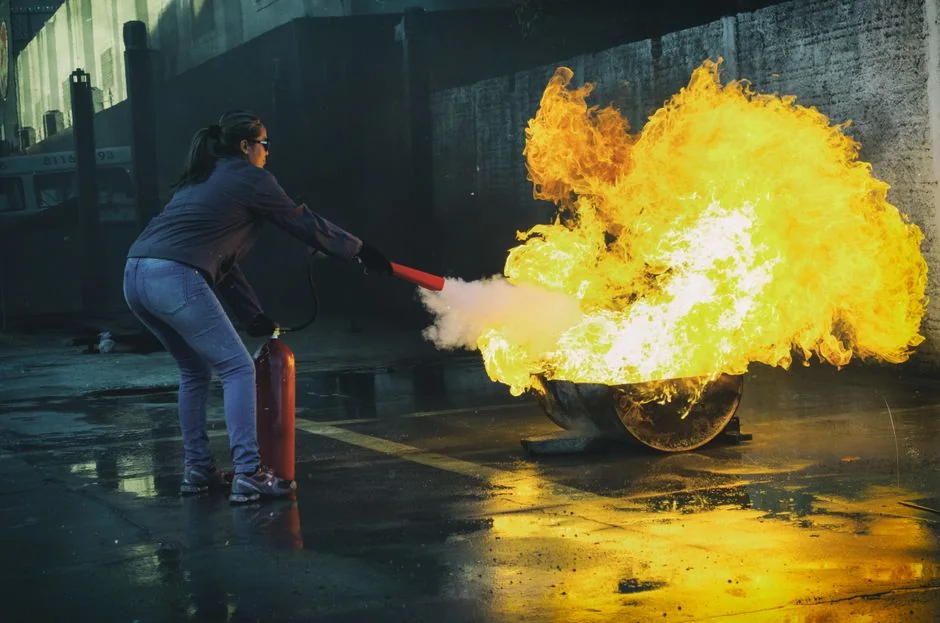
A typical morning in an Ambala textile unit
Imagine a floor supervisor in an Ambala textile unit spotting a faint hiss from a dry-powder extinguisher mounted near the loom area. The pin is still intact, but the pressure gauge reads low. In the rush to meet a production deadline, the team ignores the warning, only to discover the unit’s fire alarm triggers minutes later when a short circuit sparks a blaze. The extinguisher sputters, buying precious seconds but not enough to contain the flames. The incident forces a shutdown, damages machinery, and leaves the owner scrambling for a quick replacement, underscoring why timely refills matter.
The same scenario repeats across Ambala’s bustling industrial corridors, from the metal-working sheds near the railway line to the food-processing plants in the Nangal sector. Portable extinguishers are the first line of defense, yet many owners treat them like decorative fixtures rather than active safety tools. When the gauge drops, the visual cue is easy to miss, especially in noisy, dust-laden environments where attention is split among production targets and delivery schedules. Ignoring the gauge can turn a manageable spark into a full-scale fire, jeopardising inventory, employee safety, and the business’s reputation.
The rule for portable extinguishers is simple. Any unit that has been discharged, or that shows a pressure drop, must go for servicing straight away. Even when the gauge looks normal, each type has a periodic service and pressure-test schedule under the relevant Indian Standard, and the service tag shows when it is next due. Missing those dates causes trouble at inspection and, more importantly, leaves the equipment unreliable when a fire actually occurs.
When a refill is due in practice
An extinguisher has to be refilled after every use, and it needs periodic servicing and a cylinder pressure test at the intervals the relevant Indian Standard sets for its type. After servicing, the tag on the extinguisher should show the date, the name of the service provider and the next due date. An inspecting officer will look at these tags, and expired ones are a common reason for a Fire NOC renewal to be held up.
For small shops in the Ambala Cantonment market, the process is straightforward: a local licensed dealer collects the unit, empties the spent agent, re-pressurises the cylinder, and refills it with a fresh charge. Larger factories often prefer an on-site service where a technician arrives with a mobile refill unit, conducts the pressure test, and tops up the extinguisher without moving heavy cylinders. Both approaches must be recorded in a logbook that the fire officer can review during routine visits.
Larger industrial sites often go a step further and keep a master list that cross-references cylinder numbers, locations and due dates, with copies of the service certificates. This documentation satisfies inspectors and gives a quick reference during internal safety drills.
- Check the gauge monthly; a low reading means the unit goes for servicing.
- Record every discharge in a logbook.
- Follow the pressure-test due date on the service tag.
Step-by-step: getting a proper refill in Ambala
First, choose a reliable refill provider. Ask whether they handle the specific agent your extinguisher uses (dry powder, CO2, foam or wet chemical) and whether they give a dated service tag and certificate. Then arrange a pickup or on-site service, choosing a date that avoids production interruptions. Keep each extinguisher's number handy, so the unit can be matched to its service history.
When the technician arrives, they perform a visual inspection for corrosion, valve damage, or missing safety pins. Next comes the hydrostatic pressure test: the cylinder is placed in a calibrated tester, and the pressure is measured against the manufacturer’s specifications. If the cylinder passes, the old agent is evacuated, the cylinder is flushed, and a fresh charge is introduced using a calibrated filling machine. The technician then re-attaches the safety pin, updates the label with the new service date, and hands over a stamped refill certificate.
A professional fire-safety service provider can bring a mobile unit to the site, conduct the pressure test, and complete the refill without moving heavy cylinders, thereby minimising downtime for Ambala manufacturers. The service includes a printed certificate and an entry in a digital log that the business can access anytime. This approach is especially useful for firms that operate round-the-clock and cannot afford to send extinguishers off-site.
- Confirm the provider handles your extinguisher type.
- Schedule service during low-production periods.
- Keep the refill certificate with your records.
Cost-effective habits to keep your extinguishers ready
Routine visual checks are free but invaluable. Train floor supervisors to glance at the pressure gauge during shift handovers and to verify that safety pins remain intact. A simple checklist posted near the extinguishers reminds staff to report any low reading immediately. By catching a pressure drop early, you avoid the higher cost of a full cylinder replacement, which can be significant for larger ABC-type units used in warehouses.
Another money-saving tip is to consolidate refills for multiple units. Rather than calling a dealer for each extinguisher, schedule a bulk service once a quarter. The provider can bring a larger refill tank, reducing travel time and labour charges. In Ambala’s mixed-use zones, where both small shops and large godowns coexist, a coordinated schedule prevents the chaotic scramble that often follows an unexpected inspection.
Finally, maintain a spare cylinder for each type of extinguisher in critical areas such as the loading dock or the chemical storage room. The spare stays fully charged and can be swapped instantly if the primary unit fails a test. This redundancy eliminates production loss while the faulty unit undergoes service, turning a potential shutdown into a routine maintenance event.
- Post a gauge-check checklist at each extinguisher.
- Group refill requests to reduce service fees.
- Keep a fully charged spare for high-risk zones.
What happens if you skip the refill cycle
An expired or under-charged extinguisher may look intact but will discharge weakly, delivering insufficient agent to suppress a fire. In a hypothetical scenario where a small bakery in Ambala’s Model Town experiences a grease fire, the attendant pulls the extinguisher, hears a faint hiss, and watches the foam sputter out in a thin mist. The fire spreads to the ceiling, causing smoke damage and forcing the bakery to close for repairs, all because the extinguisher had not been refilled after its last use a year earlier.
Beyond the immediate safety risk, regulatory consequences follow swiftly. The fire department’s routine audit will flag the missing refill certificate, leading to a notice of non-compliance. The business may be required to halt operations until all extinguishers are brought up to date, incurring lost revenue and potential legal exposure if an accident occurs during the downtime. Insurance claims can also be affected, as many policies stipulate valid maintenance records as a condition for payout.
To avoid these pitfalls, treat the refill schedule as a non-negotiable part of your operational calendar. Engage a qualified fire-safety service provider for a site audit; their experts will map out every extinguisher, note upcoming service dates, and arrange a seamless refill plan that fits your production schedule. Proactive planning can keep your assets protected and your business running without interruption.
Need help with this at your own site?
Zed-King Institute of Fire And Safety has handled fire equipment, AMC, Fire NOC and training for factories, schools, hospitals and commercial buildings across Haryana since 2012. Free site survey, honest assessment — only what your building actually needs.